


How to Protect Your Subaru from Falling Leaves, Rain, and Road Salt
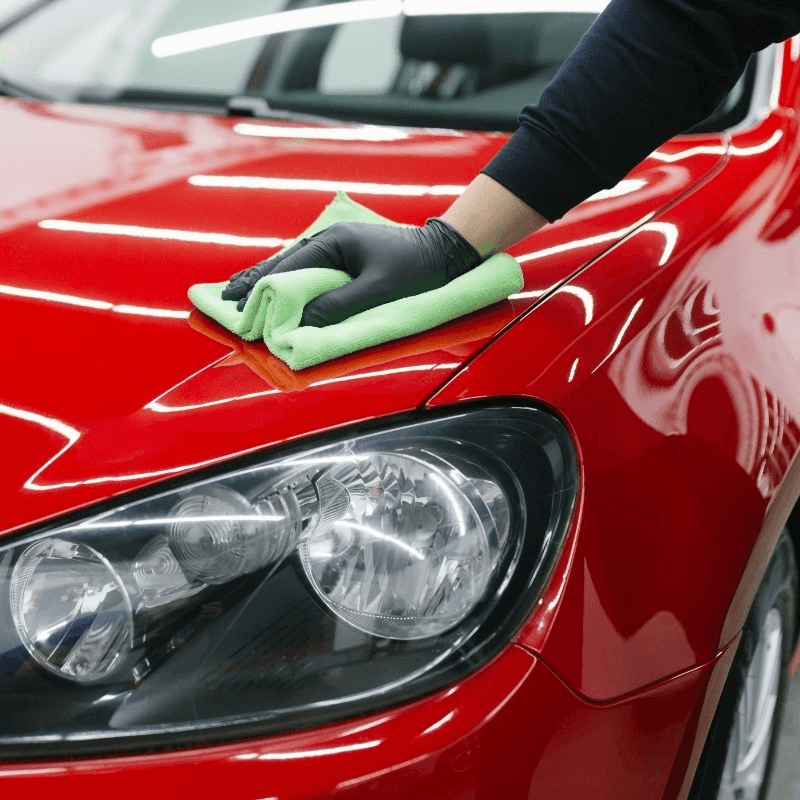
How to Protect Your Subaru from Falling Leaves, Rain, and Road Salt
Owning a Subaru means you’re built for every journey, through sun, snow, rain, and winding, leaf-covered backroads. That adventurous spirit is what makes Subaru drivers unique, but it also means your vehicle faces more of the environment’s wear and tear than most.
In New Jersey, where fall rains lead straight into salt-covered winter roads, seasonal maintenance is about preserving performance, safety, and long-term value. Even though Subaru’s engineering, from its Symmetrical All-Wheel Drive to its high-tensile steel body construction, offers superior durability, the elements can still take their toll if not managed proactively.
At Richard Lucas Subaru, our service team sees it every year: vehicles that could’ve avoided corrosion, leaks, or performance loss with a few simple preventive steps.
Damage from Falling Leaves

Autumn leaves are a symbol of the season, but they can wreak havoc on a vehicle’s internal systems, especially Subarus that spend time outdoors or parked under trees. The combination of organic decay, moisture, and acidity turns leaves into silent saboteurs for both the bodywork and engine bay.
1. How Leaves Affect Vehicle Systems
Drainage Clogs:
Your Subaru has multiple water drainage paths, including the cowl panel below the windshield, sunroof channels, and plenum chambers. When leaves or pine needles collect here, they block these drains. Water that would normally exit harmlessly instead backs up, seeping into sensitive areas like your HVAC blower motor, fuse box, or floorboards.
If left unchecked, this can cause:
- Moldy interior smells
- Electrical corrosion in the fuse block
- Damage to the cabin blower fan
- Damp carpets leading to hidden rust
Subaru’s advanced cabin filtration system depends on a clean air intake; blocked vents restrict airflow and force your A/C or heater to work harder.
Preventive measure: At least once every two weeks in the fall, open your hood and vacuum out leaves around the windshield base, under wiper arms, and inside hood creases.
2. Chemical and Physical Paint Damage
Leaves contain tannins, natural acids that can etch clear coat finishes if left in contact for too long. When combined with sap, pollen, or rainwater, they create localized pH imbalances that literally “bite” into the clear coat, especially when sunlight bakes them onto the paint surface.
Even a week of neglect can leave behind dull patches or permanent marks.
Protection steps:
- Wash your Subaru weekly with a pH-neutral car shampoo during fall.
- Apply a polymer sealant or ceramic coating before leaf season; these hydrophobic barriers prevent contaminants from sticking.
- Avoid brushing leaves off dry, instead, spray them with water first to minimize micro-scratches.
3. Fire, Rust, and Mechanical Risks
When leaves accumulate underneath the vehicle — particularly near the exhaust or catalytic converter, which can exceed 1,000°F — there’s a legitimate fire risk. Beyond that, damp leaves packed against metal components hold moisture for days, speeding up oxidation on the exhaust, suspension, and subframe.
What Subaru technicians do: During your regular service, our technicians use compressed air and underbody inspection lights to clear debris from structural nooks that trap organic matter. Doing this seasonally can extend the underbody lifespan by years.
How Rain Challenges Your Subaru
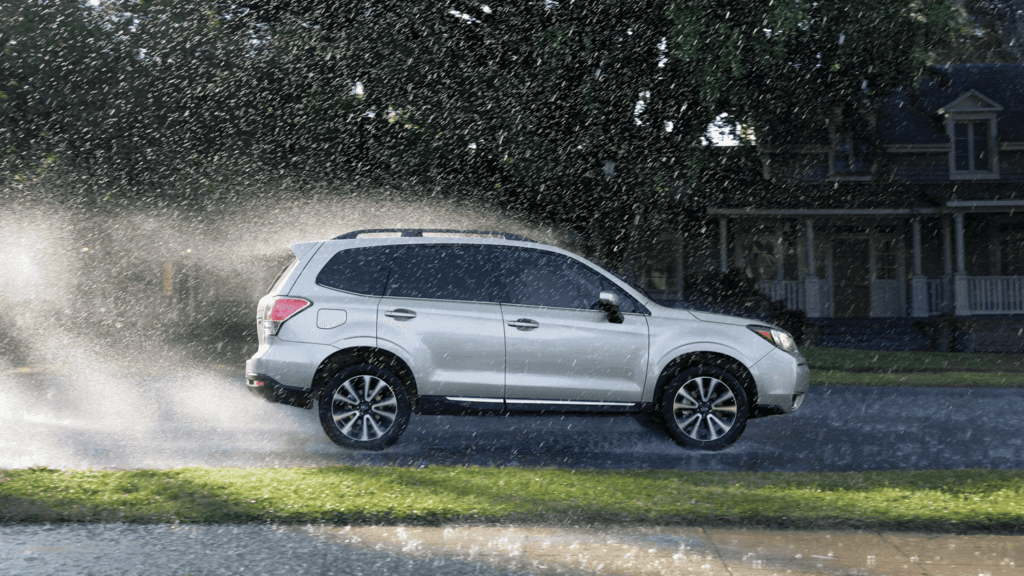
Subarus are among the most capable vehicles in wet conditions, thanks to their low center of gravity and symmetrical power delivery. But while your AWD keeps you on the road, moisture and rain introduce subtle mechanical stresses that accumulate over time.
1. Vision and Safety Systems
Rain doesn’t just reduce visibility, it interferes with driver assistance sensors like Subaru’s EyeSight® system. Water spots, dirt, or condensation on the windshield can distort the twin-camera feed used for adaptive cruise control, pre-collision braking, and lane keep assist.
Care tip: Clean your windshield inside and out weekly with a non-ammonia glass cleaner, and inspect the EyeSight® camera housing for residue or fogging.
Also, wiper blade deterioration can leave streaks that obscure the view. Subaru recommends OEM wipers made with graphite-coated rubber that maintain even pressure and resist UV cracking longer than standard blades.
2. Tires and Hydroplaning Prevention
Even the best AWD can’t overcome worn tires. Hydroplaning occurs when your tires lose direct contact with the road surface, floating on a layer of water.
Physics tells us that as tire tread depth decreases below 4/32”, the channels that expel water lose efficiency. Subaru’s tire tread pattern is designed for multi-directional water evacuation, but only when tread depth is maintained.
Do this:
- Check tread depth monthly using a penny or tread gauge.
- Keep tire pressure at Subaru’s specified PSI (usually found on the driver’s door jamb). Pressure drops roughly 1 PSI for every 10°F drop in temperature.
- If you often drive in heavy rain, consider Subaru-approved all-weather tires like the Yokohama Geolandar G015, which offer enhanced siping for water dispersion.
3. Electrical and Cabin Protection
Moisture has a way of sneaking into door seals, trunk gaskets, and wire harness connectors. Modern Subarus rely on dozens of sensors (wheel speed, O2, backup camera, lane assist). If moisture enters a connector, even a tiny bit of corrosion can cause intermittent faults.
DIY inspection: Run your fingers along door seals — they should feel supple, not dry or cracked. Use silicone-based conditioner to keep them flexible and watertight.
Inside, Subaru’s carpet insulation is thick for noise reduction, but it can trap moisture under the surface. Always remove soaked floor mats after rain and dry them before reinserting.
Road Salt: The Silent Destroyer
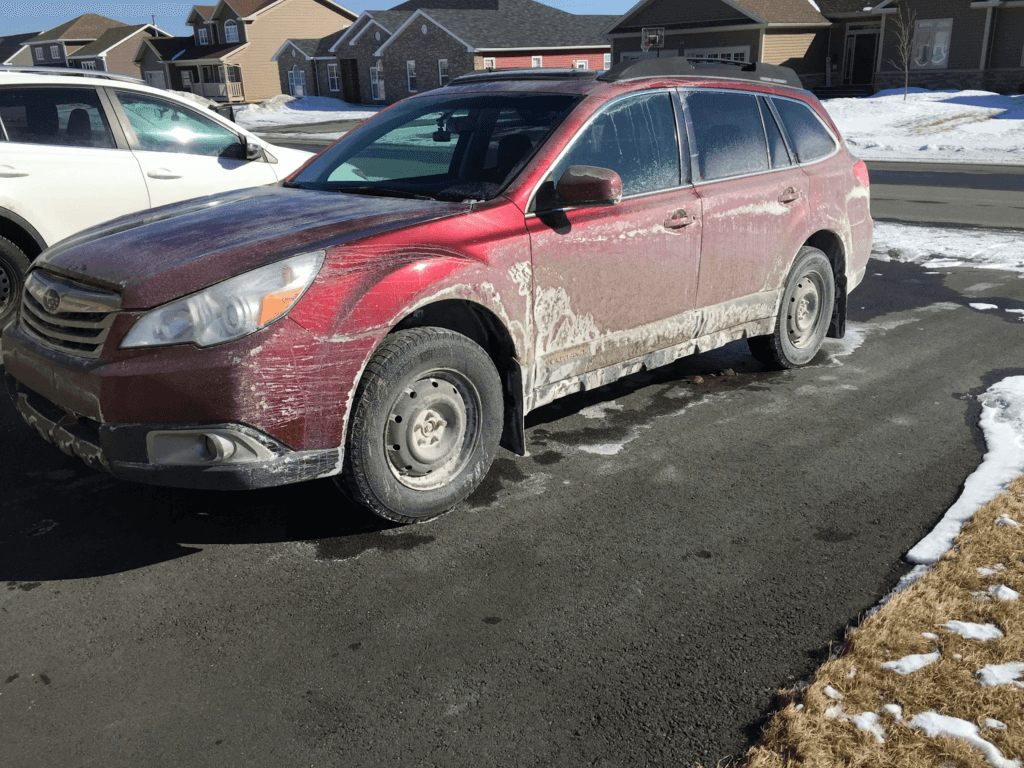
Once temperatures dip below freezing, road crews in New Jersey begin spreading rock salt and brine mixtures to prevent ice buildup. These compounds, mainly sodium chloride or calcium chloride, are highly corrosive.
When salt mixes with water, it accelerates oxidation by creating an electrolyte solution that enables metal ions to react with oxygen more readily. Over time, this causes the red-brown scaling we know as rust — not just surface rust, but structural corrosion that can eat through brake lines, frames, and suspension mounts.
1. Where Corrosion Starts
The undercarriage, suspension arms, fuel and brake lines, and wheel wells are the most exposed zones. Tiny chips from road debris allow saltwater to penetrate bare metal.
Subaru’s ring-shaped reinforcement frame provides excellent rigidity, but it also has internal cavities where salty moisture can settle if not regularly flushed.
Professional care tip: At Richard Lucas Subaru, our technicians perform a pressurized undercarriage wash that targets drainage holes and channel interiors. This process clears corrosive residue that a standard car wash might miss.
2. Coatings and Barriers
Subaru vehicles are built with zinc-coated steel panels, but even this layer erodes over time. Adding a synthetic sealant provides multi-season protection.
Options include:
- Wax-based undercoating: Economical, ideal for yearly application.
- Oil-based corrosion inhibitors: Penetrate seams and welds, great for older vehicles.
- Ceramic paint coatings: Last 12–24 months, resist salt, UV, and acid rain.
These protective films repel moisture and act as an oxygen barrier.
3. Brake and Suspension Care
Salt exposure eats into brake rotors and calipers, causing pitting and premature wear. It can also seize caliper slide pins, leading to uneven braking. Similarly, salt accumulation on struts and control arm bushings shortens component life.
Pro tip: Schedule a mid-winter brake service to clean and lubricate slide pins, check pad wear, and spray rust inhibitors on exposed bolts.
4. Wheel and Sensor Protection
Modern Subarus use aluminum alloy wheels with a clear coat finish, but salt can creep beneath chips and cause oxidation (“white rust”). Salt also interferes with TPMS sensors, corroding valve stems.
Always rinse your wheels thoroughly, and if possible, remove them once a season to clean both sides.
The Comprehensive Seasonal Maintenance Plan
Here’s a master checklist Subaru owners should follow from late September through March:
Exterior Protection
- Wash weekly with undercarriage rinse.
- Apply wax or ceramic coat before first frost.
- Clear leaves from hood creases, windshield base, and air intake vents.
- Inspect wheel wells for trapped debris.
Mechanical & Electrical Care
- Inspect battery terminals for corrosion.
- Test alternator output (rainy weather = higher electrical load).
- Check headlights, fog lamps, and EyeSight® lenses for clarity.
- Replace engine air and cabin filters before winter.
Safety & Comfort Prep
- Check tire pressure and tread depth.
- Inspect all fluid levels: coolant, brake fluid, transmission, and windshield washer.
- Test heater and defroster operation.
- Lubricate door hinges and seals with silicone grease.
Professional Service Add-Ons
- Underbody wash + rustproof spray every 3 months.
- Seasonal multipoint inspection (standard at Richard Lucas Subaru).
- Coolant flush every 2 years to maintain corrosion inhibitors.
- Alignment check after winter pothole season.
Why It All Matters
Seasonal care is about preserving engineering integrity. Corrosion doesn’t only affect metal; it can interfere with grounding points, exhaust sensors, and brake performance. Neglecting it can mean replacing costly components prematurely.
Preventive care extends the life of your Subaru, maintains fuel efficiency, and protects your investment. At Richard Lucas Subaru, our certified technicians know exactly what your vehicle faces in New Jersey’s climate.
We offer:
- Fall & Winter Service Packages
- Rust and Undercarriage Protection Treatments
- Genuine Subaru Accessories like All-Weather Mats and Splash Guards
- Multi-Point Inspections
Your Subaru was made to handle everything nature throws at it, but it deserves a little help along the way.
Schedule your seasonal service appointment today at Richard Lucas Subaru.
0 comment(s) so far on How to Protect Your Subaru from Falling Leaves, Rain, and Road Salt