


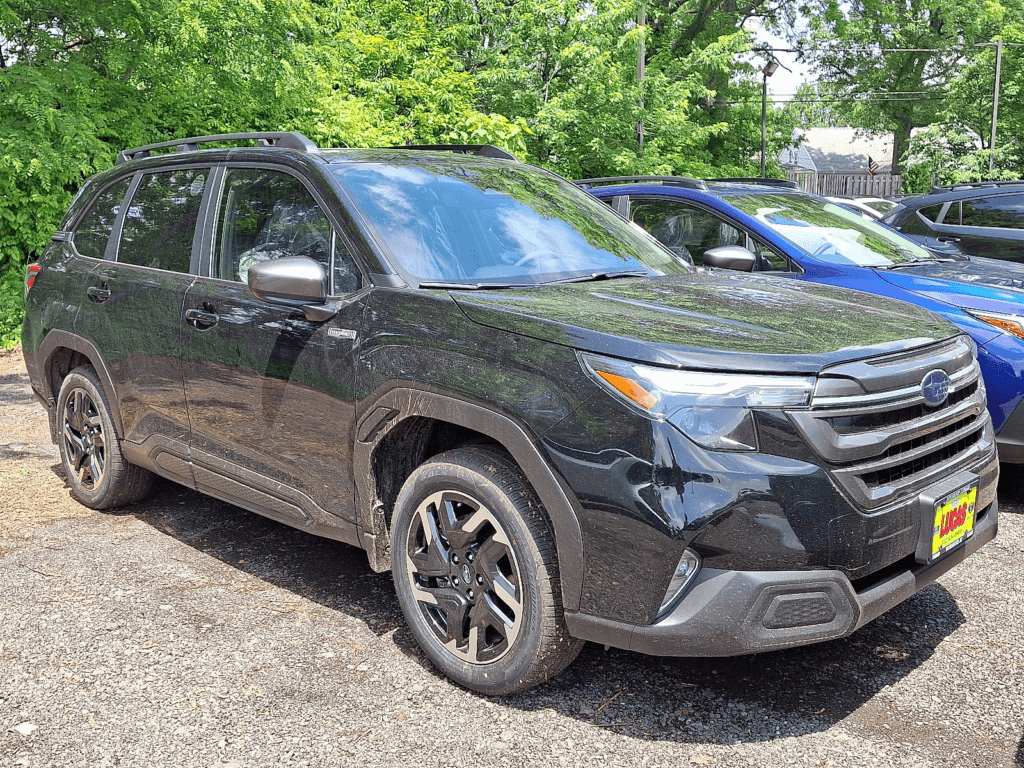
2025 Subaru Forester vs. 2025 Subaru Forester Hybrid
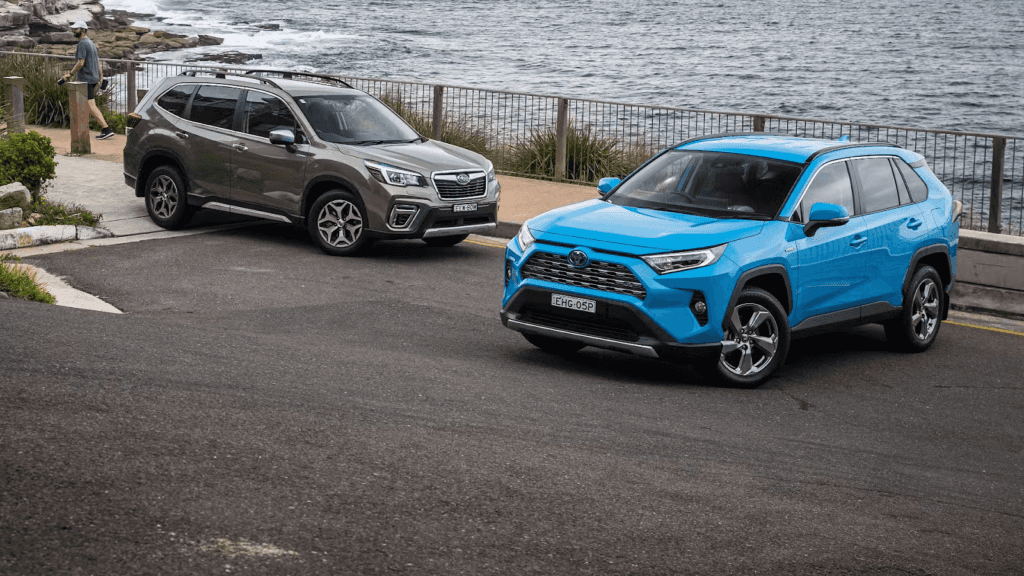
The Subaru Forester has always carved its own path in the compact SUV segment. With its standard all-wheel drive, rugged personality, and no-nonsense practicality, it’s long been the go-to for drivers who want a reliable daily driver that also doesn’t flinch at the sight of a muddy trail. But 2025 marks a turning point for the first time, Subaru is offering a hybrid version of the Forester. And it’s not just a simple engine swap. The 2025 Forester Hybrid introduces meaningful differences in performance, efficiency, technology, and overall driving character. So, which one deserves a spot in your driveway?
Powertrain & Performance
Forester (Gas Only):
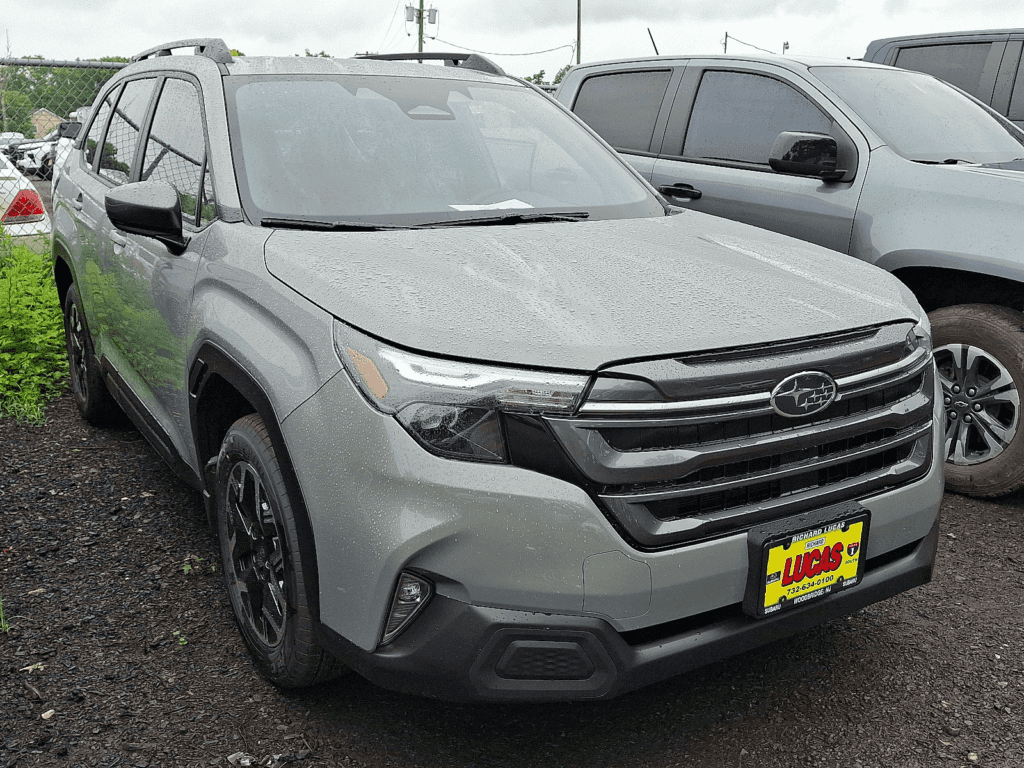
- Engine: 2.5-liter naturally aspirated flat-four (boxer engine)
- Horsepower: 180 hp
- Torque: 178 lb-ft
- Transmission: CVT (Continuously Variable Transmission)
- Drivetrain: Symmetrical All-Wheel Drive (standard)
- 0–60 MPH: ~8.3 seconds
The traditional Forester’s engine gets the job done, but nobody’s mistaking it for a rocket ship. Acceleration is modest, and it’s tuned more for fuel economy and all-weather confidence than for performance. The CVT, while improved over past versions, still has a rubber-band-like feel under hard acceleration, and though the gas Forester is capable in bad weather and on light trails, it lacks a real sense of urgency.
Forester Hybrid:
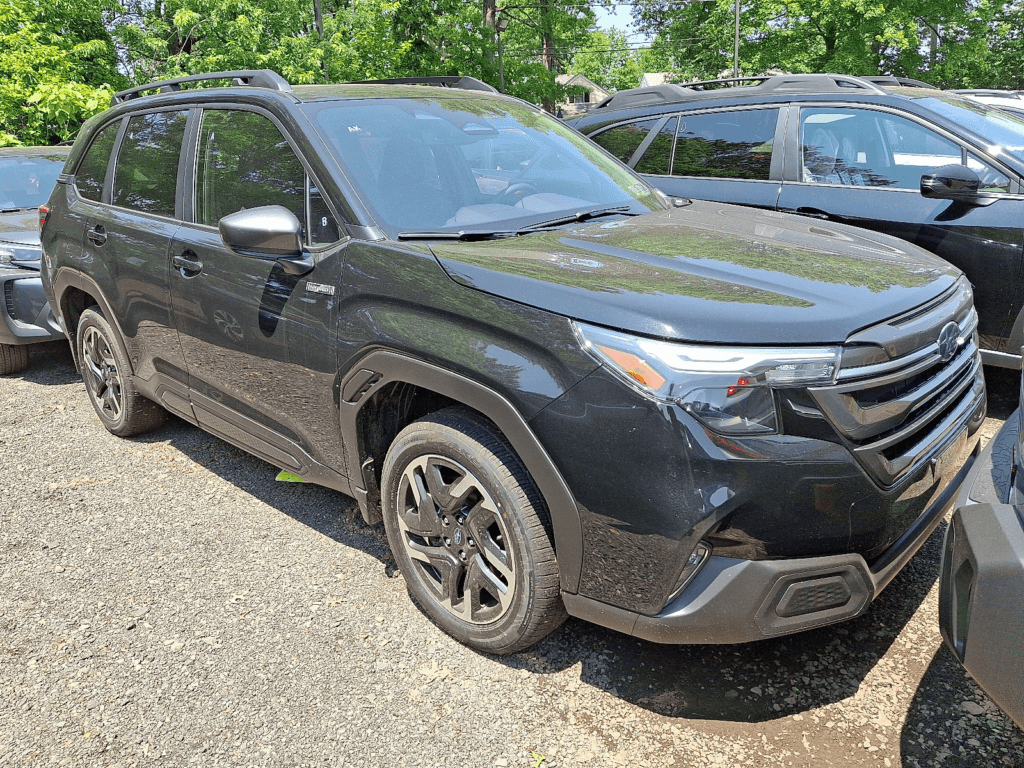
- Engine: 2.5-liter Atkinson-cycle flat-four
- Electric Motors: Two (one traction motor, one generator)
- Combined Output: 194 hp
- Torque: 154 lb-ft (gas) + 199 lb-ft (electric motor)
- Battery: 1.1-kWh lithium-ion
- Transmission: Electrified CVT with planetary gearset
- Drivetrain: Symmetrical AWD with full hybrid integration
- 0–60 MPH (est.): Slightly quicker than 8.3 seconds
Subaru’s first real attempt at a modern hybrid SUV finally lands here — and it’s better than you might expect. Despite gaining some weight (around 300 pounds more than the standard version), the Forester Hybrid benefits from immediate low-end torque thanks to the electric motor. It feels livelier off the line and more responsive in stop-and-go traffic. Highway passing should also feel smoother due to that instant electric assist.
The hybrid powertrain is a series-parallel system, meaning it can run on gas, electricity, or a combination of both — and it does so seamlessly. The planetary CVT is smoother and less droney than Subaru’s older belt-driven CVTs. Also notable: unlike many AWD hybrids, Subaru’s setup powers all four wheels from a single system, rather than relying on a separate motor for the rear axle.
Fuel Economy
| Model | City MPG | Highway MPG | Combined MPG |
| Forester (Gas) | 26–29 mpg | 33–34 mpg | 28–29 mpg |
| Forester Hybrid | 35 mpg | 34 mpg | 35 mpg |
Yes, the Forester Hybrid is more efficient, but what’s interesting is how it gets there. The Hybrid doesn’t drastically outpace the gas Forester in highway mileage, but around town, where the electric motor can handle low-speed duties, the difference adds up. Over time, especially for city drivers or commuters, that 6–7 mpg bump will be noticeable at the pump.
Ride Quality & Refinement
Forester (Gas):
The gas Forester has made strides in quietness and ride comfort, especially for 2025. Subaru increased the use of body adhesives, upgraded the insulation, and retuned the suspension slightly. Still, under hard acceleration or at highway speeds, some engine and wind noise sneaks in.
Forester Hybrid:
This is where the Hybrid really pulls ahead. It’s noticeably quieter, thanks not just to its ability to run in EV mode at low speeds, but also to additional sound-deadening materials, thicker glass, and that smoother hybrid CVT. The ride is well-composed even on rough pavement, and the suspension does a great job of hiding its added weight.
Steering in both versions is light and predictable, perfect for around-town driving, though not exactly sporty. The Hybrid gets a new electric steering rack borrowed from the WRX parts bin, which feels a bit sharper, if still comfort-tuned.
Interior Space, Comfort & Tech
| Feature | Forester | Forester Hybrid |
| Seating | 5 adults | 5 adults |
| Cargo (Behind 2nd Row) | 28.0 cu. ft. | 27.5 cu. ft. |
| Cargo (Seats Folded) | 68.0 cu. ft. | 69.1 cu. ft. |
| Infotainment | 11.6″ touchscreen, wireless Apple CarPlay/Android Auto | Same |
| Gauge Cluster | Analog + LCD | 12.3″ digital (Hybrid exclusive) |
Both Foresters share the same sixth-gen cabin layout: wide-open sightlines, supportive seats, and user-friendly controls. The Hybrid builds on that with a digital gauge cluster that integrates nav maps and hybrid system info, something the regular Forester doesn’t offer. Interior materials feel more upscale across the board, and we particularly liked the Hybrid’s Premium and Sport trims, which mix durable faux leather with contrast stitching and ambient lighting.
AWD & Off-Road Capability
Both Foresters come with standard Symmetrical All-Wheel Drive and a generous 8.7 inches of ground clearance. That’s better than many competitors, and it means you can tackle unpaved roads and snowy driveways with confidence. But here’s where the Hybrid gets a gold star:
- Its AWD system is fully integrated with the hybrid powertrain, unlike the dual-motor split setups in most hybrid competitors.
- You retain all the features you’d expect: X-Mode, hill descent control, and torque vectoring for better cornering and control on loose surfaces.
So yeah, the Hybrid doesn’t compromise the Forester’s outdoorsy DNA.
Safety & Driver Assistance
Subaru continues to deliver one of the best standard safety suites in the industry. Every 2025 Forester, hybrid or not, includes:
- EyeSight driver assist with:
- Adaptive cruise control
- Lane keep assist
- Pre-collision braking
- Lane departure warning
- Optional extras: blind-spot monitoring, rear cross-traffic alert, and 360-degree camera system.
Subaru’s EyeSight tech has improved over time and is now better at distinguishing between human error and intentional maneuvering, meaning it nags you less and helps you more.
Which Forester Should You Choose?
If you want the simplest path to Forester ownership, the gas model is still a great pick. It’s cheaper upfront, proven, and still returns respectable MPG numbers. But if you’re in this for the long haul, or you just want a quieter, smoother, more modern-feeling drive, the 2025 Forester Hybrid is a no-brainer.
Forester (Gas): Choose it if…
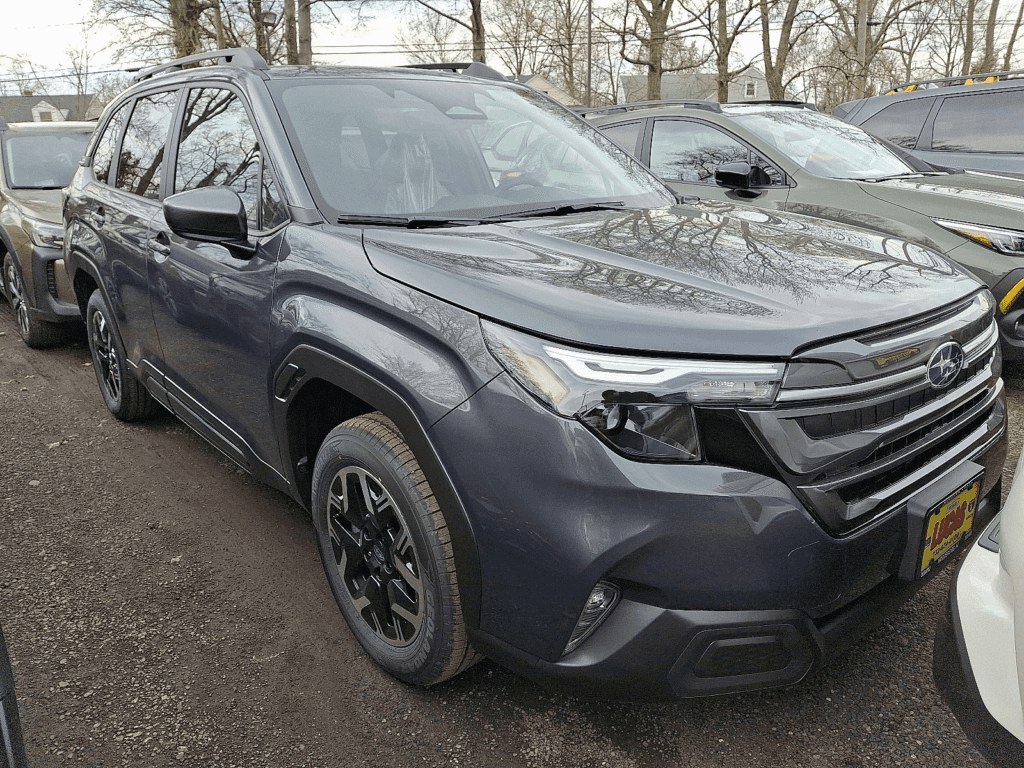
- You’re on a tighter budget
- You value simplicity and don’t drive much in traffic
- You’re fine trading a few bells and whistles for savings
Forester Hybrid: Choose it if…
- You drive frequently in the city or in stop-and-go conditions
- You want a quieter, smoother ride
- You’re okay spending a little more now to save at the pump and enjoy some upgrades
Both models stay true to what makes the Forester such a beloved SUV: all-weather capability, impressive visibility, and just the right amount of ruggedness. But if Subaru’s mission was to make the Forester more modern without making it complicated, the Hybrid is mission accomplished.
Looking to buy the 2025 Subaru Forester or Forester Hybrid? Richard Lucas Subaru makes it easy. You can visit us in 1077 Route 1, Woodbridge Township, NJ to check out our inventory in person.
Ready to get started? Browse our inventory online or stop by Richard Lucas Subaru today!
0 comment(s) so far on 2025 Subaru Forester vs. 2025 Subaru Forester Hybrid